What to Eat When You Don't Feel Like Eating: A GLP-1 User's Guide to Nutrient Density
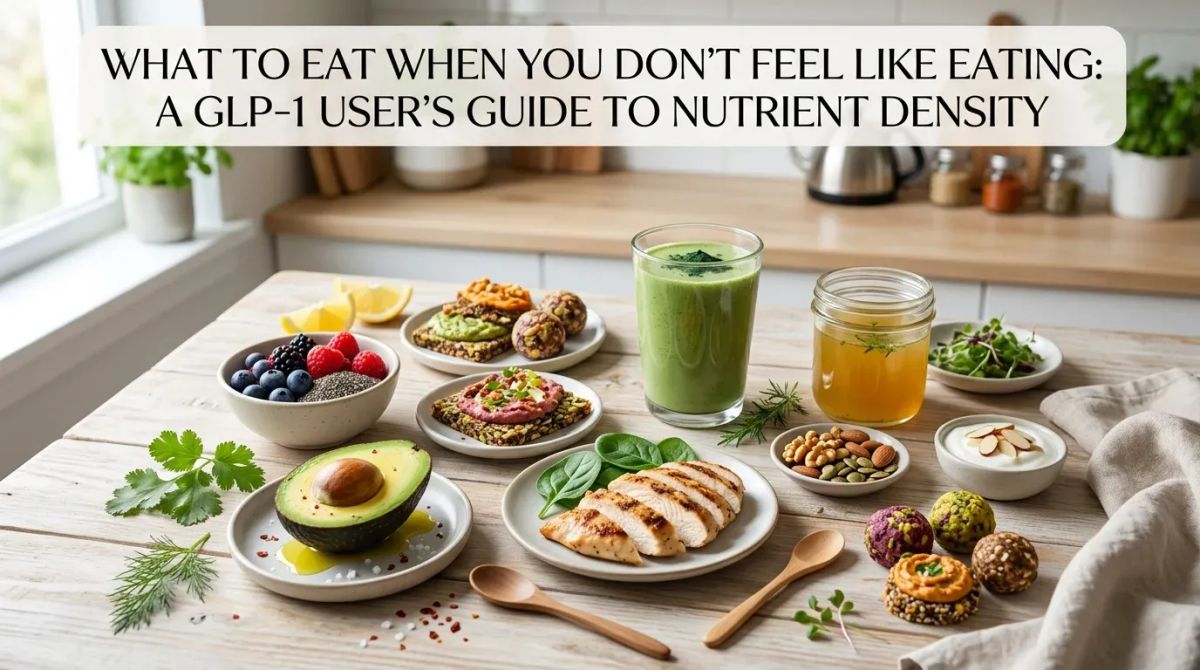
By a weight loss management physician, because your shrinking appetite shouldn't shrink your health along with it.
I had a patient last month, let's call her Diane, who sat across from me looking genuinely confused. She'd lost 28 pounds in three months on semaglutide. Her blood pressure was improving. Her A1C was trending down. And she looked miserable.
"Doc, I know I should be happy. But I feel exhausted. My hair is thinning. I had two colds back to back. And honestly? I just don't want to eat. Ever. The thought of food makes me queasy."
Diane's story isn't unusual. I hear versions of it almost every week now. The GLP-1 medications, semaglutide, tirzepatide, and the rest — are genuinely remarkable tools for weight management. They work. The appetite suppression is real, the weight comes off, and for many patients, the reduction in what people call "food noise" feels like a revelation.
But here's the part that doesn't get enough airtime: when your appetite drops off a cliff, your nutrition often goes with it. And that creates a whole separate set of problems that nobody warned you about.
The Paradox Nobody Talks About
GLP-1 receptor agonists work through several pathways simultaneously. They slow gastric emptying, which means food sits in your stomach longer. They act on the hypothalamus, the part of your brain that regulates hunger and fullness. And they dampen the reward response to food, so that plate of pasta just doesn't call to you the way it used to.
That's the therapeutic goal. That's why the medications produce meaningful weight loss.
But the human body doesn't distinguish between "I'm eating less because I'm on a strategic weight management plan" and "I'm eating less because food has become genuinely unappealing." Your muscles, bones, immune system, and organs still need the same raw materials they always did. Arguably more, because your body is undergoing the metabolic stress of weight loss.
What I see in practice, constantly, are patients who've essentially gone from eating 2,200 calories of mostly processed food to eating 900 calories of mostly random snacking. A banana here. Some crackers there. Maybe half a chicken breast if they're feeling ambitious. The scale keeps dropping and they assume everything is fine.
It is not fine.
What's Actually at Stake
Let me be direct about this because I think patients deserve honesty rather than vague reassurance.
Research presented at the Endocrine Society's annual meeting showed that without a deliberate strategy, up to 40% of the weight lost on GLP-1 medications can come from lean body mass, including muscle. Not fat. Muscle. The very tissue that keeps your metabolism running, keeps you functional, and protects you from falls and fractures as you age.
Beyond muscle loss, I'm routinely seeing patients who develop deficiencies in iron, vitamin D, magnesium, calcium, and B vitamins within a few months of starting GLP-1 therapy. These aren't exotic nutrient problems. These are the basics, and they're getting missed because patients simply aren't eating enough volume or variety of food to cover their needs.
That's why nutrient density, how much nutritional value you pack into each calorie ,becomes the single most important dietary concept for anyone on these medications. When you're eating 50% less food, every single bite has to work harder for you.
The Protein Problem (And Why It's Job One)
I'm going to be blunt: if you're on a GLP-1 medication and you're not actively thinking about protein, you're probably not getting enough of it.
The general recommendation for adults is about 0.8 grams of protein per kilogram of body weight per day. But during active weight loss, especially medication-assisted weight loss, most obesity medicine specialists, myself included, recommend significantly more. The range I work with for my patients is 1.2 to 1.6 grams per kilogram of body weight daily. For someone who weighs 200 pounds, that's roughly 110 to 145 grams of protein every single day.
That sounds like a lot. And when your appetite is suppressed, it feels like climbing a mountain. But this is not negotiable if you want to preserve your muscle mass.
Here's how I tell my patients to think about it: protein first, everything else second. Before you eat anything, breakfast, lunch, dinner, snack, ask yourself one question: where is the protein in this meal?
Practical protein sources that tend to be well-tolerated on GLP-1s include Greek yogurt, cottage cheese, eggs, rotisserie chicken, canned tuna or salmon, string cheese, protein shakes (whey, pea, or soy-based), edamame, and bone broth. These are foods that don't require a lot of chewing, don't sit too heavy, and can be consumed even when your appetite is lukewarm at best.
A protein shake, in particular, can be a lifesaver on those days when the thought of solid food makes you nauseous. I've had patients tell me their shake is the only reason they hit their protein target on bad appetite days. That's fine. That counts. Use whatever tools work.
Building a Nausea-Friendly, Nutrient-Dense Plate
The nausea issue deserves its own conversation because it genuinely interferes with good nutrition. GLP-1 medications slow down gastric emptying, which means large meals, particularly high-fat ones, tend to sit like a brick and make you feel awful.
The fix isn't complicated, but it does require a shift in thinking.
Eat smaller, more frequently. Instead of three traditional meals, aim for five or six mini-meals throughout the day. Each one should be roughly the size of your fist. Think of it less as "meals" and more as "nutritional check-ins" spread across your waking hours.
Prioritize what's easy to digest. On high-nausea days, bland doesn't mean nutritionally empty. Scrambled eggs on toast gives you protein, B vitamins, and some carbohydrate energy. A smoothie made with Greek yogurt, a handful of spinach, half a banana, and some frozen berries delivers protein, fiber, potassium, iron, and vitamin C in a form your stomach usually tolerates better than a plate of solid food.
Keep cold foods in rotation. This is a clinical pearl that comes straight from patient experience: many GLP-1 users find cold foods easier to tolerate than hot ones. The smell of cooking seems to trigger nausea for some people. Cold options like overnight oats with protein powder, chilled soup, fruit with nut butter, and pre-cooked chicken straight from the fridge are all worth trying.
Don't drink large amounts of fluid with meals. This one surprises people, but when your stomach empties slowly, adding a big glass of water on top of food just amplifies that overfull feeling. Sip water between meals instead, and aim for eight to ten glasses across the day. Hydration is critical, GLP-1s can suppress your sense of thirst just like they suppress hunger.
The Nutrient-Dense Foods I Actually Recommend
I could give you a textbook list. But what I actually tell my patients, the stuff that works in real life, is a shorter, more practical list.
Eggs. I am never going to stop recommending eggs to my GLP-1 patients. Two eggs give you about 12 grams of protein, plus choline for brain health, B12, vitamin D, and selenium. They cook in three minutes. They cost almost nothing. Scrambled, hard-boiled, in an omelet, whatever works for you.
Salmon and sardines. Fatty fish gives you protein plus omega-3 fatty acids in a package that most stomachs handle well. Canned salmon or sardines on crackers is a perfectly respectable mini-meal. You do not need to be a gourmet cook to eat well on these medications.
Leafy greens, however you can get them. If you can eat a salad, great. If salads sound terrible right now, blend spinach into a smoothie. You won't taste it, I promise. Greens give you folate, iron, vitamin K, magnesium, and fiber, all things my GLP-1 patients tend to run low on.
Greek yogurt. It has roughly double the protein of regular yogurt. Add some berries and a tablespoon of ground flaxseed and you've got a snack that covers protein, probiotics, fiber, and omega-3s. Keep a few containers in the fridge so there's always something you can grab when your appetite gives you a narrow window.
Sweet potatoes. Complex carbohydrates that won't spike your blood sugar, packed with vitamin A, potassium, and fiber. I have patients who roast a batch on Sunday and eat them throughout the week.
Beans and lentils. Outstanding combination of protein, fiber, iron, and folate. A small cup of lentil soup can be easier to stomach than a slab of meat. If gas and bloating are concerns, start with small portions and increase gradually.
The Micronutrient Gaps You Need to Watch
Beyond protein, I specifically monitor my GLP-1 patients for a few key deficiencies:
Vitamin D. Reduced food intake almost always means reduced vitamin D, and most Americans were already deficient before they started eating less. I typically recommend supplementation and check levels every few months.
Iron. Especially in premenopausal women. Fatigue on GLP-1s is common, and iron deficiency is frequently a contributor. If you're feeling wiped out, ask your doctor to check your ferritin level, it's a simple blood test.
Magnesium. Essential for muscle function, sleep quality, and blood sugar regulation. Nuts, seeds, dark chocolate, and leafy greens are all good sources. A magnesium supplement at bedtime can also help with the constipation that some GLP-1 users experience.
Fiber. Constipation is one of the most common GLP-1 side effects, and eating less food means eating less fiber unless you're deliberately choosing fiber-rich options. Ground flaxseed, chia seeds, berries, and vegetables should be daily staples.
When to Get Professional Help
I want to make something clear: GLP-1 medications are prescription treatments that should be part of a supervised medical program. The medication alone isn't enough. You need someone monitoring your labs, tracking your body composition, adjusting your dosage, and helping you navigate the nutritional challenges that come with significant appetite suppression.
This is actually one of the reasons I think platforms like TrimRx have filled an important gap. Their model, doctor-supervised GLP-1 weight management with ongoing check-ins and personalized treatment plans — reflects the kind of comprehensive approach that gives patients the best shot at doing this safely and sustainably. The medication gets shipped to your door, which removes the access barrier, but more importantly, you're working with licensed providers who can monitor your progress and make adjustments. That ongoing clinical relationship matters. It matters a lot.
Too many people are getting these medications without any guidance on nutrition, exercise, or monitoring. That worries me as a clinician. Weight loss without muscle preservation isn't healthy weight loss. Weight loss that leaves you nutritionally depleted isn't a win. The number on the scale is one metric, and it's not even the most important one.
A Sample Day (For the Days When Eating Feels Impossible)
I keep this framework taped to the wall in my exam room because patients ask for it constantly:
Morning (even if you're not hungry): A protein shake blended with a handful of spinach and half a banana. This gets you 25-30 grams of protein and several servings of micronutrients before you've fully woken up.
Mid-morning: A hard-boiled egg and a few slices of avocado. Maybe some whole grain crackers if you're tolerating them. Another 8-10 grams of protein plus healthy fats.
Lunch: A small bowl of lentil soup or a few ounces of rotisserie chicken with some roasted sweet potato. Keep the portion small — you can always eat more if you're tolerating it.
Afternoon: Greek yogurt with berries and a sprinkle of chia seeds. This is your fiber and probiotic hit for the day.
Dinner: Whatever protein you can manage — salmon, chicken, tofu, eggs again — with whatever vegetables sound least offensive. Steam them, roast them, blend them into a soup. Just get them in.
Before bed (if needed): A glass of milk, a piece of string cheese, or a small handful of almonds if you realize you're still short on protein.
Is this glamorous? No. Does it keep you out of nutritional trouble? Yes.
The Bigger Picture
Here's what I wish every GLP-1 patient understood from day one: these medications are a tool, not a complete solution. The tool is powerful — genuinely, historically powerful. We've never had anything this effective for weight management that didn't involve surgery.
But a tool only works as well as the strategy behind it. The patients who do best in my practice, the ones who lose fat, preserve muscle, maintain their energy, keep their hair, and actually feel good during the process, are the ones who treat nutrition as seriously as they treat the medication.
They eat protein first. They choose nutrient-dense foods. They stay hydrated. They take their supplements. They do some form of resistance training two to three times a week. And they work with a medical team that's watching the full picture, not just the scale.
If you're struggling with appetite on your GLP-1, if eating feels like a chore, if nausea is winning, if you're living on crackers and hoping for the best — please know that this is incredibly common and there are practical solutions. Talk to your prescribing provider. Consider working with a registered dietitian who understands these medications. And start thinking of food not as something you need an appetite for, but as medicine your body requires whether you feel hungry or not.
Your body is doing something remarkable right now. Give it what it needs to do that work safely.
